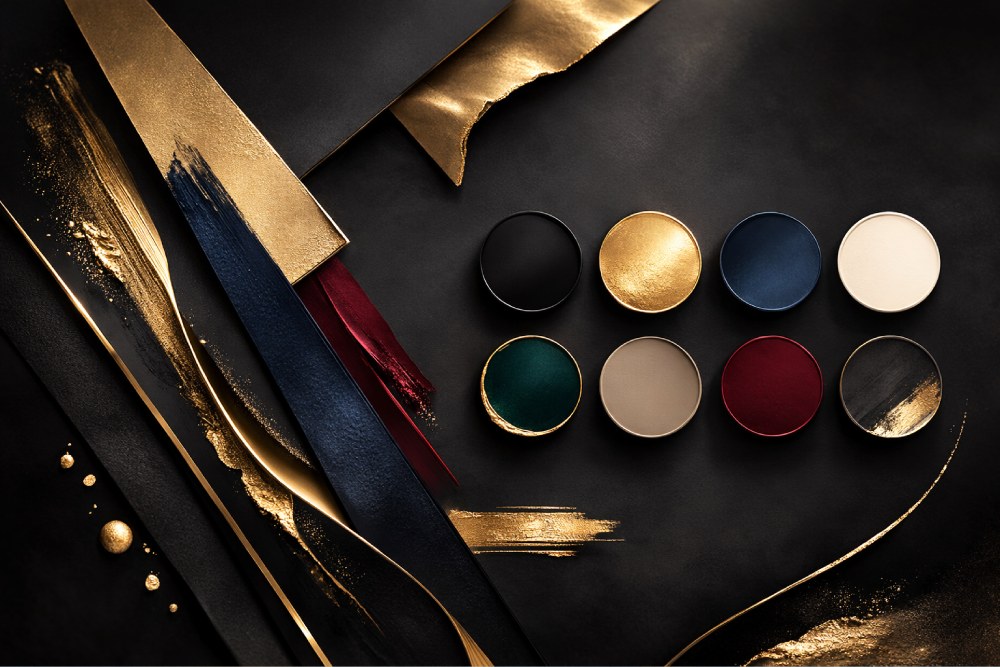
Color is never just decoration. In the world of luxury branding, it is a strategy — a carefully calculated decision that shapes perception, evokes emotion, and signals status before a single word is read. When you see a deep midnight blue or a brushed matte gold, your brain immediately associates it with exclusivity, refinement, and trust. That’s not a coincidence. That’s the power of a luxury color palette done right.
Whether you’re a business owner, designer, or someone fascinated by brand psychology, understanding how top luxury brands wield color can completely transform the way you think about visual identity.
Before diving into specific palettes, let’s ground ourselves in science. Research consistently shows that color alone can account for up to 90% of a person’s first impression of a brand. For luxury brands, this statistic carries enormous weight — because luxury is built almost entirely on perception.
A luxury logo doesn’t just identify a brand. It communicates heritage, craftsmanship, and aspiration within milliseconds. The colors chosen to represent that logo carry that entire emotional narrative on their shoulders.
Few colors communicate luxury as effortlessly as black. It is timeless, powerful, and unapologetically bold. Brands like Chanel, Saint Laurent, and Balenciaga have built iconic identities around stark black logos that feel both modern and eternal.
Black signals authority and sophistication. When a logo sits in pure black — especially in a clean, serif typeface — it whispers exclusivity without saying a word. There is no need for flash or flair. The confidence of the color does the work.
Gold has symbolized wealth and power across civilizations for thousands of years, and that legacy hasn’t faded. Luxury brands like Versace, Rolex, and Dolce & Gabbana frequently incorporate gold tones to instantly telegraph opulence.
But here’s what separates a luxury gold from a gaudy one: restraint. True luxury brands use gold as an accent, not a flood. A thin gold line, a subtle monogram, or a delicate emblem in brushed gold against a dark background — that balance is where the magic lives.
Navy blue carries a fascinating duality — it conveys authority and reliability while simultaneously feeling refined and exclusive. Brands in luxury automotive, financial services, and hospitality often gravitate toward deep blues for this exact reason.
Think of Bentley’s understated navy branding or the rich blue tones found in premium financial institution logos. The color says: we have been here a long time, and we will continue to be.
Burgundy, wine, and deep crimson communicate something different from bright red. Instead of energy and urgency, these deeper tones suggest richness, indulgence, and quiet confidence. Luxury fashion houses and high-end wine brands leverage this palette to evoke sensory pleasure and desire without crossing into aggression.
Sometimes, luxury speaks in a near-whisper. Cream and ivory tones feel expensive because they feel effortless — like a brand so secure in its identity that it needs no bold announcement. These palettes appear heavily in high-end skincare, bridal fashion, and luxury interiors, where the absence of color becomes a statement in itself.
The difference between a logo that looks expensive and one that merely tries to look expensive often comes down to three things: intentionality, consistency, and restraint.
Intentionality means every color choice is deliberate. There is a reason behind the specific shade, its pairing, and how it behaves across different materials and mediums — from embossed packaging to digital screens.
Consistency means the palette never drifts. A luxury brand’s colors look the same on a flagship store facade, a product tag, a digital ad, and a CEO’s business card. That consistency builds subconscious recognition over time.
Restraint may be the most critical element. Luxury brands rarely use more than two or three colors in their core palette. Simplicity signals confidence. Complexity signals insecurity.
If you’re looking to position your brand in the luxury or premium space, here’s a framework to guide your color decisions:
Start with your brand’s core emotion. Are you sophisticated? Warm and indulgent? Bold and modern? Each emotional territory maps to a specific color family. Define the feeling first, then find the color.
Choose a dominant anchor color. This is the color that will appear most frequently — in your logo, your backgrounds, your packaging. It should feel ownable and aligned with your brand personality.
Select one or two accent colors. These create contrast, hierarchy, and visual interest. For luxury palettes, metallic accents (gold, silver, rose gold) almost always elevate the perceived quality of the anchor color.
Test across contexts. A color that looks stunning on a cream business card might fall flat on a digital banner. Luxury brands test their palettes exhaustively across every touchpoint.
There’s a reason luxury brands have used the same core colors for decades — and it isn’t tradition for tradition’s sake. These palettes tap into deeply ingrained psychological associations that are nearly universal across cultures.
Dark colors reduce visual noise and draw the eye inward, creating a sense of focus and intentionality. Metallic tones trigger associations with rarity and value — because for most of human history, gold and silver were rare and valuable. Muted, desaturated tones signal maturity and taste, implying that the brand (and by extension, its customer) has moved beyond the need to shout for attention.
These aren’t arbitrary design decisions. They are the result of decades — sometimes centuries — of brand evolution, market testing, and cultural refinement.
The rise of digital branding has introduced new complexity. Colors behave differently on screens than they do on physical materials. A rich burgundy that looks stunning on embossed leather packaging may appear flat or dull on a mobile screen. Luxury brands now invest heavily in color management systems that ensure visual consistency across every medium.
For digital-first or hybrid brands, this means understanding the difference between RGB and CMYK color profiles, choosing brand colors that translate well across both print and digital environments, and testing extensively on the devices your customers actually use.
Color is one of the most powerful tools available in a brand’s arsenal — and in luxury branding, it may be the most powerful of all. The world’s most iconic luxury logos succeed not because they use the most colors or the boldest designs, but because they use the right colors with precision, purpose, and unwavering consistency.
Whether you’re building a brand from scratch or repositioning an existing one, your color palette deserves as much strategic attention as your product itself. Get it right, and color becomes a silent ambassador — one that works around the clock to communicate quality, trust, and aspiration.
If your brand is ready to command attention from the first glance, the conversation starts with color. And it starts now.